 A First Step
For most of my life, I had been the person who put everyone else first. The helper.
The organiser. The one who would do anything for the people around me.
If someone upset me, I often stayed quiet. I was frightened that speaking up might
mean I wasn't liked anymore, or that I might lose the connection.
Somewhere along the way, I felt like I'd lost my voice.
In my early 30s, with two young children, I realised I couldn't keep doing things the
same way. Changing felt frightening, because being the person who was always
there for everyone had become such a big part of who I was.
So I tried counselling.
Several years later, I found myself slipping back into some of those old patterns, so I
went back to counselling.
But this time, something else happened.
I became curious about what it might feel like to be on the other side of the chair.
I started wondering what it would be like to help someone else understand
themselves a little more, feel more comfortable in who they are and perhaps make
changes that could help them live a life that felt more authentic to them?
For a while, it was just a thought.
People told me I'd care too deeply and might find it difficult not to carry the
experience of the person I was supporting.
I can't go into the details, but the case involved a little girl.
During the trial, I heard a police officer speak about her and watched videos showing how she had supported her. Something stayed with me.
She couldn't fix what had happened.
She couldn't take away the hurt.
But she could make a difference.
She had helped set that little girl on a stronger, healthier path for the years ahead.
And suddenly I realised something.
I could hold space for someone's struggles without carrying them for them.
I could focus on the difference that could be made, however small.
Around the same time, I happened to be talking to another juror who was a children's counsellor. She will probably never know it, but that conversation helped solidify something I had already been thinking about for years.
At 44, I enrolled on my first counselling course.
Alongside this, I was juggling two separate work roles and navigating plenty of personal challenges of my own.
It wasn't easy.
I've never considered myself particularly academic, and I found that side of the training challenging.
But that wasn't the hardest part.
The hardest part was my own counselling.
Opening boxes that had been shut for decades.
Discovering things about myself.
Looking more deeply at patterns I had carried for years.
And doing all of that while managing a very busy life.
My placement took me into drug and alcohol rehabilitation, working with adults.
It wasn't where I had imagined my path would lead, but it became, and continues to be, an incredibly important part of it.
Having lost both a very dear friend and my brother, who had struggled with addiction, that work felt particularly meaningful.
There were times when I wondered whether I could keep going.
But in January 2026, I received my final qualification certificate.
Just one week later, I was offered redundancy from my banking career.
That felt like a little push from the universe.
I know how important it can be to have someone alongside you as you make sense of where you are, understand yourself with compassion and find your own way forward.
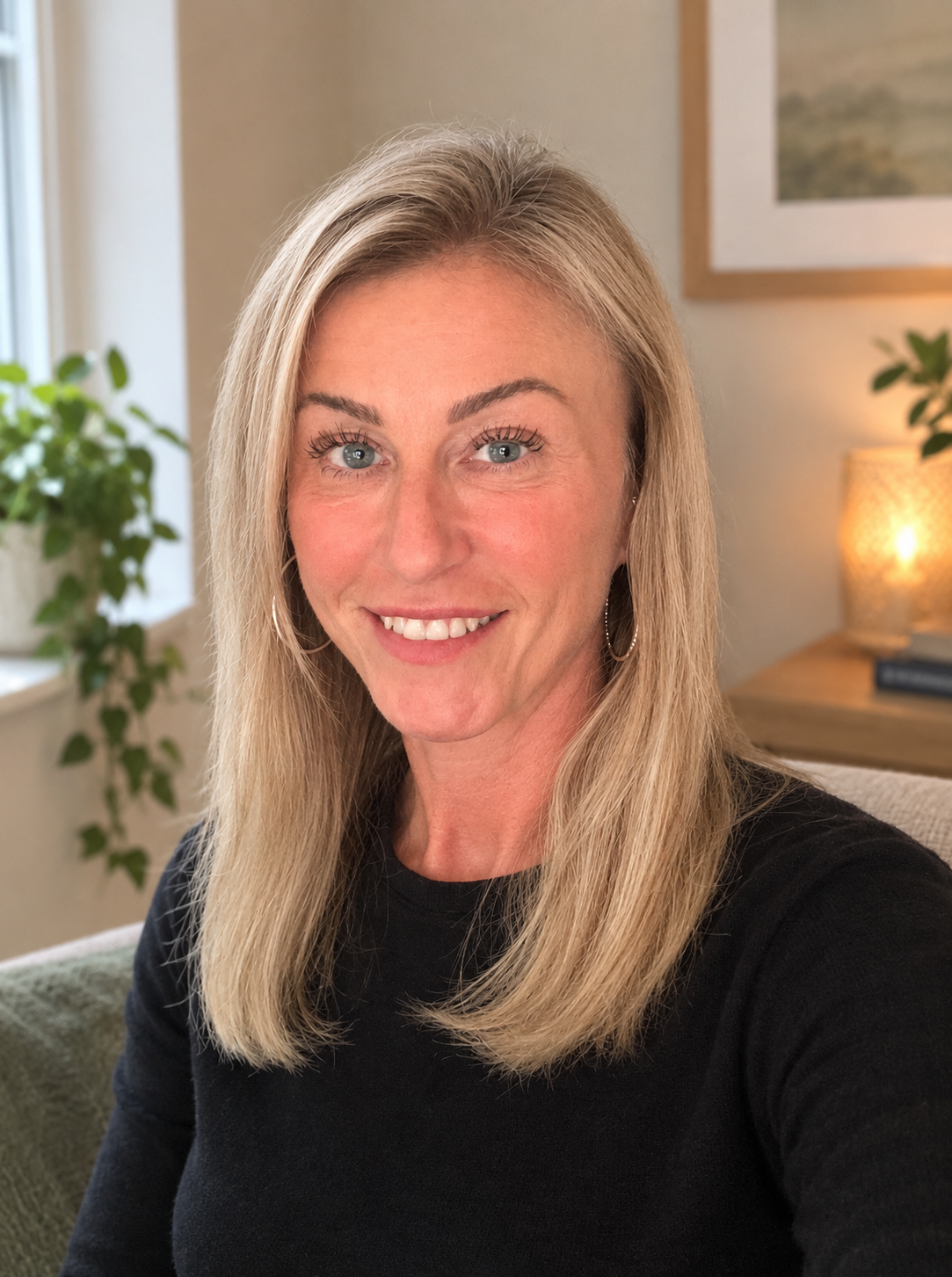
That's what I hope to offer through Your Path Counselling.
A safe, supportive space where you can explore your own path, at your own pace.
I've always been someone who cares deeply about others and wants to support the people around me.
The difference now is that I don't need to lose myself in that role.
I can be there because I genuinely want to be. With stronger boundaries, a stronger sense of myself and the ability to be fully present with the person sitting in front of me.